

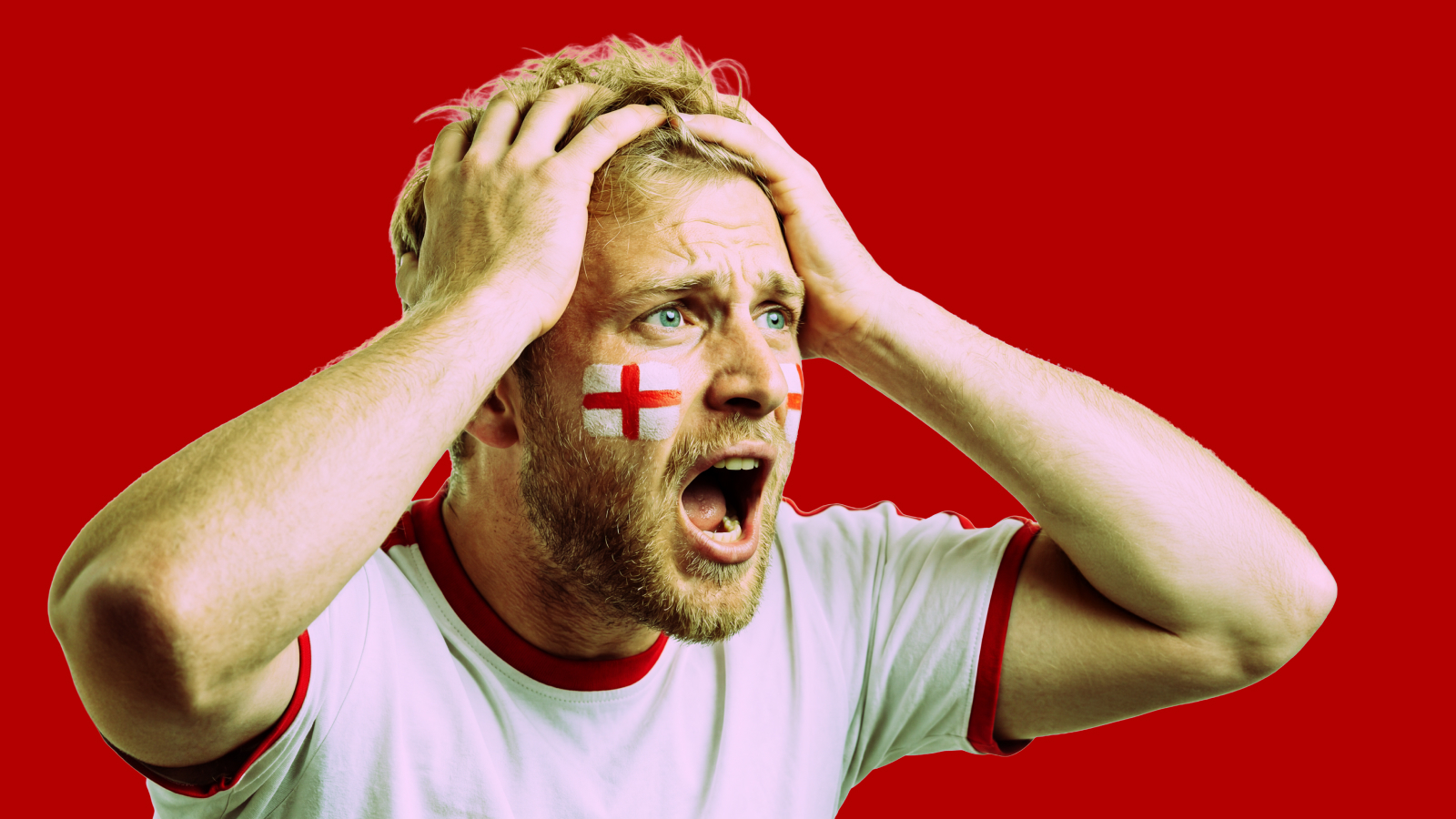
What the 2026 World Cup teaches us about the psychology of memorable experiences
The 2026 World Cup will be remembered for many things, unfortunately none of which are England winning! However, I am sure Jude Bellingham will get a mention and, being a nation of eternal optimists, let's see what 2030 has in store for us.
Alongside the goals, the handbags at dawn and the questionable VAR decisions, there will be another defining feature of the tournament: the penalty shootouts.
While football fans will remember the winners and the players who lifted the trophy, they will also remember something else much more clearly - the misses.
Of which there are plenty to mention from this year's tournament; Germany being knocked out by Paraguay, the Netherlands falling to Morocco after an eventful shootout, and we can't fail to mention England's dramatic win against Mexico in the Azteca, where the hosts had previously lost just two of their last 89 matches (go on England!).
However, the purpose of this article isn't to relive England's World Cup campaign - it's to demonstrate something fascinating about human psychology.
Because we don't remember experiences like a spreadsheet - the calculated passes and set-pieces - we remember moments. And the more unexpected and emotionally charged these moments - the more memorable.
Interestingly, businesses are no different. Whether we're buying a product or deciding whether to recommend a brand, we rely on exactly the same psychological shortcuts.
Our brains are designed to remember moments, not averages
A football match contains thousands of decisions.
Yet after 120 minutes of football, our memory often reduces the entire experience down to one or two moments.
The winning goal, an incredible save, the missed penalty.
Why?
Because our brains are storytelling machines and we simplify experiences into narratives that help us make sense of the world.
Behavioural science helps explain why.
Why one bad moment outweighs twenty good ones
Most people make recommendations based on a stand out moment, not because everything went exactly as expected but typically because somebody or something went above and beyond their expectations (it's the whole under promise, over-deliver motto).
The opposite is also true. We rarely tell stories about businesses that are consistently average, but we'll happily recount the delayed flight or the three-hour wait on hold.
Psychologists call this the Availability Heuristic - we naturally judge an experience by the examples that come to mind most easily. The more memorable something is, the more important we assume it must have been.
That's why one frustrating interaction can suddenly make us think, "They're always like this."
They probably aren't - it's just that our memory has quietly rewritten the story.
It's not the whole journey that matters
Any sensible business will have one eye on improving the customer journey. Whether it's introducing a new touchpoint, streamlining a process or refining the way they communicate, the assumption is often that every improvement contributes equally to a better customer experience.
Behavioural science suggests otherwise.
Customers don't remember the entire journey; they remember the moments that stood out. More specifically, they remember the emotional high points and the ending.
Psychologists refer to this as the Peak-End Rule, a theory developed by Nobel Prize-winning psychologist Daniel Kahneman. It suggests that when we look back on an experience, we don't mentally average every interaction. Instead, our memories are shaped disproportionately by the most emotionally significant moment and the way the experience concluded.
For brands, this has important implications. You can invest months creating a seamless onboarding process and intuitive digital journeys, but one awkward conversation or poorly handled complaint can undo months of goodwill.
The lesson isn't that every touchpoint needs to be perfect - it's understanding which moments carry the greatest psychological weight and making sure you get those right.
Why bad news travels faster
There's another reason the missed penalty stays with us (sorry, Harry Kane).
Our brains are naturally wired to pay more attention to negative experiences than positive ones - thousands of years ago, remembering danger kept us alive and that tendency hasn't disappeared; it's simply followed us into modern life.
It's why bad reviews attract more attention than good ones and why one difficult customer can occupy more headspace than fifty happy ones.
Psychologists refer to this as Negativity Bias, and it explains why organisations often feel they're doing worse than they really are.
The negative moments simply shout louder.
What does this mean for businesses?
One of the biggest mistakes organisations make is believing every customer interaction deserves the same level of investment, although as we have explored in this article - we know they don’t.
Some moments carry far greater psychological weight than others, and the organisations that understand this are the ones that earn lasting loyalty.
Strava is a great example .
It’s not just about tracking another 5k run, people remember it because it captures the moments that matter most to them - whether that's a new personal best, completing a marathon or reaching a new milestone.
The technology is just the facilitator - it's the achievement that becomes the memory.
That's exactly what great brands do - they identify the moments people are most likely to remember and design those moments intentionally.
The Cognition perspective
At Cognition, we spend a lot of time helping organisations understand what really drives behaviour.
Often, it isn't a complete overhaul of the customer journey that's needed.
It's identifying the handful of moments that disproportionately shape how people feel about your brand - the first impression, the moment something goes wrong or the final interaction before someone leaves are all the moments that become stories.
And we know from experience that stories shape reputation.
So, as we reflect on another World Cup and another collection of unforgettable penalty shootouts, it's worth remembering that customers behave much like football fans (although without the shirt grabs and intentional tackles).
They won't remember every pass you completed.
But they'll remember the moment that made them feel something.


.png)